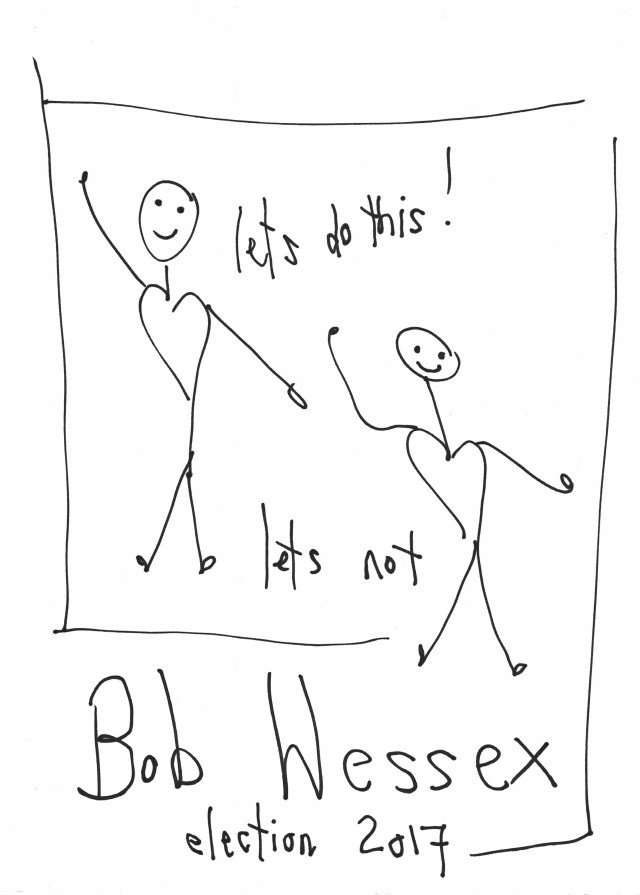
Thoughts on collapse, human agency and the new code for living
By Bob Wessex
In his recent Underthrow essay, We Need a Code (15 October 2026), Max Borders describes a civilisation afflicted by resentment, alienation and spectacle. His observations will be familiar to anyone who has watched political disagreement become a substitute for conversation, personal suffering become an identity, and the performance of virtue become more important than the practice of it. Yet his message is ultimately one of encouragement. He believes we can recover our agency, form communities around shared values and begin building a civilisation worth inhabiting, without waiting for the institutions of the old one to save us.
I believe we are already doing precisely that, although not necessarily in the form anyone expected. An extraordinary experiment in human agency is underway. Its participants number in the millions, it requires no membership or common ideology, and most of those involved would be astonished to discover that their activities might have revolutionary implications.
Human beings have never waited for permission to participate in life. They did not require a government programme to begin using motor vehicles, establish towns, adopt cellphones or discover the possibilities of the internet. New technologies entered ordinary life because people found them useful, pleasurable, convenient or liberating. Society reorganised itself around those discoveries, often long before institutions understood what was happening.
The public release of conversational language models in 2022 was an unusual event in the history of technology. A sophisticated computational capability, developed through enormous concentrations of capital and expertise, became available to ordinary people through something as familiar as conversation. There were no entrance examinations, professional licences or requirements to demonstrate an economically respectable purpose. People were simply invited to experiment – and experiment they did!
They began writing software without being professional programmers, composing songs without mastering musical notation, producing animated music videos and generating illustrated books and graphic novels on their kitchen tables. They created websites for small businesses, developed commercial ideas, designed products, investigated unfamiliar subjects and established connections with people whose interests complemented their own. Somebody made a birthday card that sang and danced for a delighted child. Somebody else finally wrote (and illustrated) the novel they had been carrying around in their imagination for thirty years.
Much of this activity had no grand purpose whatsoever. It was undertaken because it was interesting, entertaining, satisfying or simply fun. Nobody was attempting to save civilisation by making a psychedelic music video. People were enjoying the discovery that they could turn an idea into something tangible without first assembling the resources, qualifications and institutional support that might previously have been required. Work that once demanded specialist teams and months of coordination could, in some circumstances, now be attempted by an individual over a weekend.
It is worth remembering that language models are extraordinarily powerful computational systems, but they are not intelligent. They have no lived experience, personal understanding or independent stake in the consequences of their advice. They can produce astonishingly useful results while remaining spectacularly wrong about elementary matters. Their usefulness arises from the interaction between computational power and human intelligence: the experience, imagination, judgment and curiosity of the person using them.
There is another remarkable aspect to this development. Although we often communicate with these systems through written language, many can now conduct spoken conversations, listening to questions and responding aloud. Reading and writing are therefore no longer prerequisites for many forms of participation. For the first time in human history someone who struggles with literacy, or focus, or has limited formal education is not excluded. Neither is written communication a prerequisite any longer as the illiterate can use these tools, explore ideas, seek explanations and develop projects through speech alone. The significance of obliterating that barrier, particularly in societies where formal education has long determined access to opportunity, should not be underestimated.
Now, in the course of enjoying these new capabilities, people may have stumbled upon a discovery far more consequential than the technology’s original applications suggested.
The Accidental Discovery
History is full of discoveries made while people were looking for something else. Penicillin and X-rays are familiar examples of developments whose significance emerged through unexpected observations. A technology introduced for one purpose can reveal possibilities that alter our understanding of an entirely different problem.
Language models were not released to the public as a programme for psychological (or any other) emancipation. Yet people began using them to talk, sometimes for hours, weeks and even months, about the experiences, anxieties, ambitions and unresolved difficulties of their lives. In the process, some discovered that the opportunity to examine their thoughts through an endlessly available conversational interface could be remarkably useful.
I have a deeply personal interest in this development. My daughter died by suicide while taking psychiatric medication, and I have spent years thinking about the limitations of the systems through which we attempt to understand and alleviate human suffering. I know how easily a person’s life can become organised around appointments, diagnoses, treatments and the management of symptoms, while the broader question of what that person might still accomplish despite their emotional difficulties, receives comparatively little attention.
A language model is not a therapist, nor is it an impartial or infallible third party. It can misunderstand, flatter, mislead and reinforce mistaken beliefs. Nevertheless, it offers something unusual: a conversational space in which thoughts can be examined, arguments tested, experiences articulated and practical possibilities explored without the scheduling, cost or social pressures or stigma that often accompany human consultation.
The evidence that such interactions can be beneficial is beginning to emerge. A systematic review and meta-analysis published in npj Digital Medicine in March 2026 examined randomised controlled trials involving more than 7,000 participants and found statistically significant, (generally modest) reductions in depressive and anxiety symptoms among people using mental-health chatbots. A separate review published in the Journal of Medical Internet Research in December 2025, concentrating on generative conversational systems, analysed 14 randomised trials involving 6,314 participants and likewise reported an average improvement in mental-health outcomes. Particularly interesting was its finding that socially oriented conversational systems tended to perform better than those designed primarily to complete specific tasks.
These studies do not establish that ordinary, unrestricted conversations produce the same benefits, nor that language models can replace professional care. They do, however, provide empirical support for taking seriously something many users have begun to describe from personal experience. I am particularly interested in what happens beyond the alleviation of symptoms.
Consider the person who begins by discussing their unhappiness and ends by writing a song. The individual who has been unemployed for years and discovers an absorbing capacity for designing software. The isolated retiree who begins making illustrations, telling stories or establishing friendships around a creative project. Someone whose life has been dominated by an account of what is wrong with them gradually becomes preoccupied with what they want to make next.
The change is not necessarily from illness to health, nor from unemployment to paid employment. It is a shift in attention, from the management of limitations towards participation in life. Acquiring a sense of competence can itself become a source of satisfaction, motivation and renewed confidence.
This may indeed be the beginning of a substantial recovery of previously underutilised human potential. We cannot yet measure its wider scale or demonstrate that the psychological improvements observed in clinical studies translate into lasting changes in employment, creativity or community participation. But the possibility is sufficiently important to justify investigation. The most interesting unintended consequence of language models may turn out to be what happens to people when their sense of possibility expands.
The Wealth That Was Always There
Poverty has never meant an absence of intelligence, imagination or ingenuity. Nor has unemployment meant an absence of useful ability. Human beings have always possessed capacities that circumstances prevented them from developing, and society has lost incalculable value through that exclusion.
For much of history, the ability to transform an idea into a functioning enterprise depended heavily upon access to capital, education, equipment, professional expertise and influential networks. Those advantages were distributed unevenly, and the resulting inequalities reproduced from one generation to another.
Language models do not abolish poverty or eliminate the material resources necessary for production. But they can reduce some of the intellectual and organisational barriers that have historically prevented people from acting upon their ideas.
An individual can now draw upon assistance with research, coding, planning, design, translation, communication and an expanding range of creative and technical activities. They still require judgment, effort, persistence and access to other resources, but the practical distance between imagining something and attempting to produce it has diminished.
The implications extend beyond the creation of businesses or additional sources of income. They concern our understanding of human worth and the assumption that a person’s contribution must be measured by somebody else’s willingness to employ them. A grandmother producing an animated birthday greeting, a retired mechanic designing a useful invention, a person recovering from depression writing a novel, and a group of neighbours creating a community resource are all exercising capacities that might otherwise have remained dormant. Their activities need not be economically profitable to enrich their lives or the lives of others.
The recovery of those capacities changes what people can contribute within existing social and economic arrangements, and ultimately what they may no longer require those arrangements to provide.
Undergrow the System
For centuries, revolutionary politics has been dominated by the struggle to control institutions, property and wealth. One group seeks to displace another, redistribute resources and reorganise society according to a new plan. The outcome is frequently a different concentration of authority, accompanied by the familiar expectation that ordinary people must wait while somebody else constructs their future.
I am an anarchist, in the old-fashioned meaning of the word, because I believe human beings are capable of organising much more of their lives through voluntary cooperation than our prevailing political arrangements encourage. Language models introduce new practical possibilities into that conviction.
The revolution I anticipate actively seeks to avoid bloodshed, the seizure of property or compulsory redistribution. It proceeds through people becoming more capable of producing value, sharing knowledge, solving problems and cooperating within the circumstances in which they already find themselves.
A person does not need to overthrow a university to begin learning. They do not need to seize a television station to produce a documentary, obtain a publishing contract to write a book, or win an election to organise a neighbourhood project. They can begin where they are, with the resources available to them, and find others who wish to participate.
As these capabilities spread, voluntary associations can undertake increasingly complex activities. Small groups can establish enterprises, coordinate community projects, pool specialised knowledge, develop educational resources and address practical needs without necessarily constructing permanent administrative hierarchies.
This is where the political consequences become apparent. Much of the authority exercised by institutions derives from the fact that individuals cannot easily perform certain functions themselves. As the capacity for self-organisation increases, some of those dependencies may diminish. Government can become less relevant in areas where communities develop effective alternatives, not because its authority has been forcibly removed, but because people have discovered other ways to accomplish their purposes.
There will remain difficult questions concerning infrastructure, justice, security, competing interests and the stewardship of shared resources. These are genuine problems of collective life, not inconveniences that can be eliminated by computation. But the extent to which their solutions must be administered by centralised institutions is open to experimentation.
This is the anarchistic possibility that interests me: a decentralised society emerging through practice rather than being imposed through doctrine.
A New Code Is Already Being Written
In his essay, Borders encourages us to remember that we are capable of creating a flourishing civilisation, sustained by communities of trust and a code worth living by. I see the early expression of his idea in the habits developing around these new tools.
People are learning through experimentation, accepting responsibility for their projects, exchanging assistance and discovering the satisfaction of contributing something they have made themselves. Their shared values need not be formalised into a universal creed. Trust develops through cooperation, and the practices that sustain it can be refined through experience.
The movement from resentment to agency is especially significant. Powerlessness can become a permanent grievance, particularly when the opportunities available to an individual appear hopelessly restricted. But the discovery of a practical means of acting can redirect attention towards something constructive. The person who once spent an evening scrolling through political outrage may instead engage with the new tools and become absorbed in making music, researching a problem or developing an invention.
That does not mean injustice ceases to exist or that resentment is always misplaced. It means the individual has acquired another option besides remaining psychologically imprisoned by circumstances they cannot immediately change.
The transformation also alters the nature of work. A single person equipped with language models and other accessible digital tools can operate as a small creative or technical enterprise, involving collaborators when their knowledge or enthusiasm adds something valuable. Networks may form around projects rather than positions in an organisational hierarchy, allowing people to participate according to their interests and circumstances.
A new code for living could emerge from these practices without becoming another system of commandments. Its organising principle would be the preservation and expansion of human agency: people retaining the freedom to explore, create, associate, dissent and withdraw, while accepting responsibility for the consequences of their actions.
That freedom also requires vigilance. Language models are commercially controlled, unevenly accessible and capable of producing persuasive falsehoods. Dependency upon their providers could recreate the very concentration of power we hope to diminish. A society that wishes to benefit from these technologies must cultivate independent judgment, technological literacy, meaningful privacy and alternatives to monopoly.
These are reasons to develop the experiment carefully, not reasons to abandon it.
The Society We Are Beginning to Build
I anticipate a society in which education becomes an ordinary, continuous part of life rather than a privilege concentrated in youth; where older people can combine decades of experience with newly accessible technical skills; where the distinction between producers and consumers becomes increasingly fluid; and where people with limited financial resources can participate more fully in cultural, intellectual and economic activity.
Local enterprises, creative communities and voluntary networks could acquire the capacity to perform functions that presently require large organisations. Groups could coordinate resources, analyse complicated questions and make informed decisions with far less administrative overhead. The resulting diversity of arrangements might produce forms of association that are difficult to imagine from within our present political institutions. This will probably not happen evenly or without conflict, and there is no guarantee that every development will increase freedom. The distribution of technological capability, the incentives governing its ownership and the choices people make about cooperation will influence the outcome. There is a great deal to discover, and many experiments will fail.
But the minimum viable product is already here: the individual whose practical capabilities have been extended through interaction with a language model. The next stage is the social one, as those individuals develop relationships and institutions of their own choosing, testing how much can be accomplished through voluntary cooperation. That experiment does not require a population of saints, a revolutionary vanguard or universal agreement about political philosophy. It can proceed through ordinary human interests, including curiosity, pleasure, ambition, friendship and the satisfaction of making something work.
The significance for Not A Party New Zealand is considerable. Our interest lies not in persuading people to transfer their allegiance to a different political authority, but in exploring the conditions under which they may need to delegate less authority in the first place. As self-directed individuals and voluntary associations become more capable, electoral politics may gradually occupy a smaller place in the organisation of everyday life.
I do not believe we are standing on the threshold of an inevitable utopia but we have acquired an unprecedented range of practical options at a moment when many people have lost confidence in established institutions. Our task is to experiment with those options, learn from the results and develop the relationships that allow individual capabilities to become shared achievements.
What Borders describes as a necessary cultural and spiritual turn may already be occurring through activities that appear utterly unremarkable: somebody learning a new skill, making a song, starting a business, discussing a difficult experience, producing a graphic novel or collaborating with strangers on an idea that would otherwise have remained imaginary. None of these people needs to regard themselves as a revolutionary. Their participation is voluntary, their purposes are their own, and their discoveries belong to the ordinary human business of living.
That, to me, is the most promising feature of the entire development. We have not invented a new ideology and then set out to manufacture the people required to inhabit it. We have placed an immensely powerful, if remarkably unintelligent, computational instrument in the hands of human beings and begun discovering what their existing intelligence, imagination and desire for meaningful activity can accomplish with it.
The revolution nobody organised has already entered its testing phase. The minimum viable product works, the possibilities are expanding, and the people who will determine its future are already using it.
Reference
Borders, Max. (16 October 2026). &8221;We Need a Code: And Why Politics, Therapy, and Spirituality Can’t Save Us.” Underthrow, Substack.
Research supporting the psychological discussion
- Sohn et al. (2026), npj Digital Medicine. A systematic review and meta-analysis of chatbot trials found modest average reductions in depressive and anxiety symptoms. Read the study.
- Zhang et al. (2025), Journal of Medical Internet Research. A meta-analysis of 14 randomised controlled trials involving 6,314 participants found a small-to-moderate average improvement in mental-health outcomes from generative conversational systems, with substantial variation across studies. Read the study.
- Heinz et al. (2025), NEJM AI. A randomised clinical trial investigated a purpose-built conversational system for mental-health treatment. Read the study.